

Level 25 - Vocab in Context
45 Lessons
1
介绍 in Context
2
拍照 in Context
3
BONUS: Connector - "And" with 和 - 跟 - 与 & Relator - Expressing "With" Using 和
4
照相机 in Context
5
BONUS: Relator - Using 给 to Express 'Give,' 'For,' or 'To'
6
照片 in Context
7

至少 in Context
8
到 in Context
9
没想到 in Context
10
回到 in Context
11
得到 in Context
12
找到 in Context
13

来到 in Context
14

看到 in Context
15

听到 in Context
16
进 in Context
BONUS: Relator - Towards What Direction with 往
18
进来 in Context
19
进步 in Context
20
进一步 in Context
21
进去 in Context
22
山 in Context
23
出 in Context
24
出来 in Context
25
出去 in Context
26
出国 in Context
27
出发 in Context
28
出现 in Context
29
岁 in Context
30
几岁 in Context
31
BONUS: Special - Emphasizing Details with 是...的
32
变 in Context
33

变化 in Context
34
变得 in Context
35
如果 in Context
36
课 in Context
37
上课 in Context
38

下课 in Context
39
课本 in Context
40

单身 in Context
41
简单 in Context
42
鱼 in Context
43
男人 in Context
44

男朋友 in Context
45
累 in Context
Next Character
BONUS: Relator - Towards What Direction with 往
Reminder About Relators
When I was a kid, the word “preposition” made my brain shut off. There was (and still is) something about linguistic jargon that aggravated me because it always felt so pointless.
When I started learning about Chinese grammar, I came across the word 介词 jiècí - ‘preposition,’ but instead of my brain shutting off, I suddenly realized that prepositions are “relators.” 介 is the main character in the word “介绍 jièshào - to introduce.” Another way to conceptualize “introducing” is “to create a new relationship.” Now, the idea of a ‘preposition’ wasn’t so scary. They’re mere ‘relators’!
That’s why, in The Mandarin Blueprint Method, we refer to prepositions as “relators.” All sentences that contain a preposition will be marked with the tag “GW-Relator.”
How do people, places, things, events, etc., relate to each other? Is someone doing something “for” someone else? How about “to” them? What’s the origin “from” one thing to another, or distance “from” two places? We’ll discuss all of these and more in our “GW-Relator” lessons.
GW-Relator-Towards-What-Direction-介词-往
You use 往 to indicate what direction the subject is taking action towards. It’s a different word order than English. For example:
Sentence 1:
我们往上面走。 - Level 18
Wǒmen wǎng shàngmian zǒu.
We are walking towards the top.
Subject + 往 + Direction/Location + Action
我们 + 往 + 上面 + 走
In English, we’d say “walking towards the top,” whereas the order in Chinese is “towards the top walking.” You’ve probably picked up by now that Chinese often places the action towards the end of a phrase (with a few exceptions).
Sentence 2:
我正在往回走!- Level 18
Wǒ zhèngzài wǎng huí zǒu!
I’m heading back now!
Here’s another example using 走 as the action, but in this case, the direction is 回. In English, we’d say “heading” back, but in Chinese, you stick with the same character of “往“ for ’towards’ or ‘heading.’
Sentence 3:
一直往前走吧。- Level 22
Yīzhí wǎng qián zǒu ba.
Go straight.
We put this sentence here because it’s one of the most common phrases you’ll say to a taxi driver. It’s literally “Straight (一直) towards (往) the front (前) go (走).
Sentence 4:
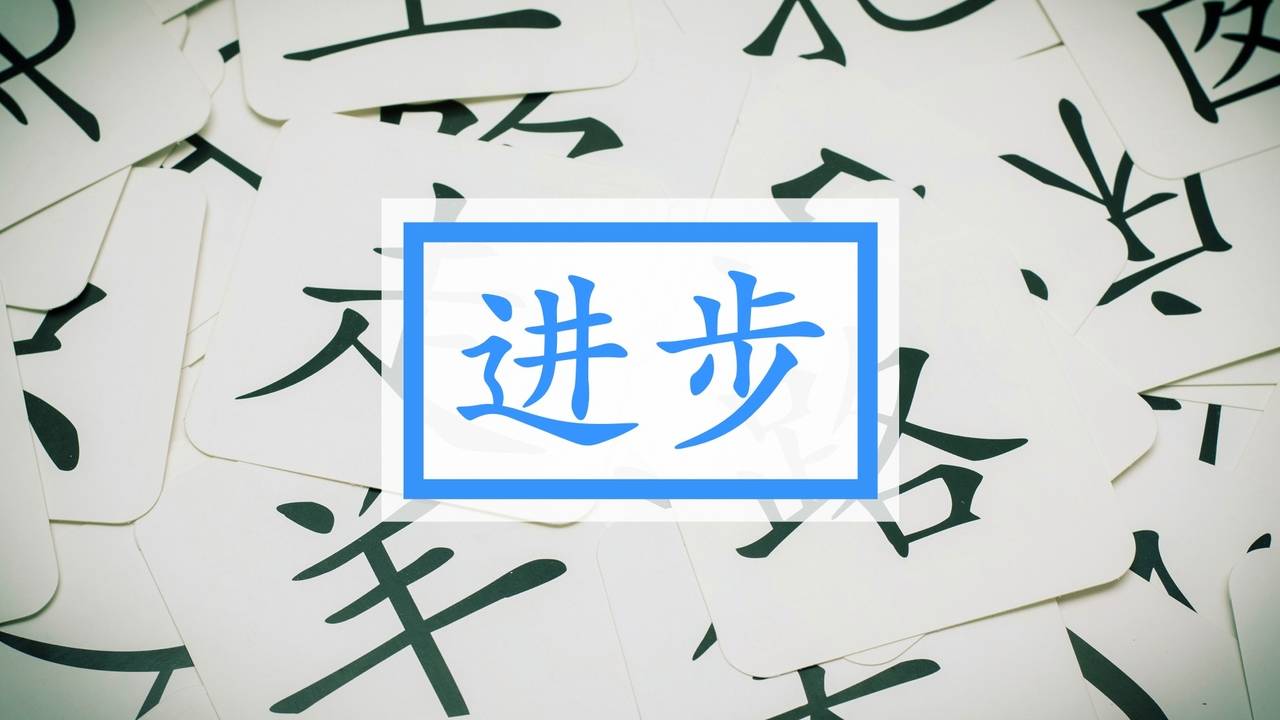
往前一步是进,往后一步是退。 - Level 25
Wǎng qián yī bù shì jìn, wǎng hòu yībù shì tuì.
One step forward is progression, and one step back is regression.
In this case, the action is “一步,” and the direction is either forward (前) or backward (后). In this sentence, the entire phrase is the subject, with a basic Subject + Verb + Object structure.
Subject: 往前(后)一步
Verb: 是
Object: 进 (退)
"Keep Going" Usage
往下 + Action - Keep doing "Action"
While it’s possible that 往下 literally means “down towards,” it can also mean “keep going.” For example:
往下讲。
Wǎng xià jiǎng.
Keep talking.
往下读/看。
Wǎng xià dú/kàn.
Keep reading.
A Written Usage of 往
When you’re at a train station, airport, or other location that has transportation signage, you’ll notice the following structure:
Action + 往 + Place or Direction
飞往成都的飞机
Fēi wǎng Chéngdū de fēijī.
Airplane headed to Chengdu.
运往芝加哥的货物。
Yùn wǎng Zhījiāgē de huòwù.
Cargo shipped to Chicago.
Now that you’ve seen 往 used in these different contexts, lookout for it moving forward in your reading and listening.
Comments 4


Click Here to Search Individual Hanzi 汉字
PHASE 1 (Levels 1-6)
- The Basics - Why Does This Method Work?
- How our Pinyin Chart is Different
- What are Chinese Characters?
- Props
- Sets
- Actors
- Scripts
- Inspiration for Scripts
- Special Effects
- Timeboxing
- Why SRS is So Important: Frequency & Memory
- How to Use SRS
- Habit Building Part 1 - Triggers
- Habit Building Part 2 - Routine
- Habit Building Part 3 - Reward
- Habit Building Part 4 - Belief
- Stroke Order Rule #1
- Stroke Order Rule #2
- Stroke Order Rule #3
- Stroke Order Rule #4
- Stroke Order Rule #5
- Stroke Order Rule #6
- Stroke Order Rule #7
- Stroke Order Rule #8
- Stroke Order Rule #9
- Stroke Order Rule #10
- Stroke Order Rule #11
- Stroke Order Rule #12
PHASE 2 (Levels 7-12)
- Understanding Chinese Words - Morphemes
- The Six Steps to Learning Words
- 3 Questions About Words
- Top-Down & Bottom-Up Learning
Living Links Series
Word Structure Series
- Part 1 - What are Chinese Words?
- Part 2 - Verb-What 述宾式
- Part 3 - Verb-How 补充式
- Part 4 - Biased 偏正式
- Part 5 - Parallel 并列式
- Part 6 - Duplicated 重叠式
- Part 7 - Subject-Predicate 主谓式
- Part 8 - Affixed 附加式
PHASE 3 (Levels 13-20)
- The Basic Chinese Sentence
- Helper - Expressing Possession with 的
- Helper - When You Can Omit 的
- Helper - Completed Actions with 了
- Helper - Change of State with 了
- Helper - Present Actions with 着
- Connector - Saying 'But' with 但是 - 可是 - 不过
- Connector - Reasons & Actions with 因为..., 所以...
- Connector - Conditional "If-Then" Statements with 如果..., 就
- Connector - Conditional "If-Then" Statements with 要是...的话
- Connector - "Or" in Questions with 还是
- Connector - “Or" in Statements with 或/或者
- Relator - Using 为 to Express "For"
- Relator - Expressing "From" with 从
- Relator - Expressing Location with 在
- Special - Using 在 as a Verb
- Tone - Softening Tone of Voice with 呢
- “How Does What" - Adverbs of Denial
- “How Does What" - Adverbs of Degree
PHASE 4 (Levels 21-30)
Level 21
- Transferring Money by Smartphone or Bank
- Walk in the Park?! I Have 汉字 to Study!
- Who Determine's a Baby's Looks, Mom or Dad?
Level 22
- How Many Pages of the Book Have You Read?
- Many People Don't Want to Have Babies
- My Girlfriend Can Really Eat!
- What Do You Like to Do?
- What Method Works for Learning Chinese?
Level 23
- Eating Bread
- I Met My Girlfriend in the Park
- Something is Different About My Dog Lately
- The Older Brother is Better Than the Younger Brother
- The Right and Left Side of the Office
- Three Meals a Day
Level 24
- Annoying People
- Breaking Up at the End of the Date
- Going on a Date
- My Two Friends and I
- Overtime at Work
- Red Packets
- Two People in a Relationship
Level 25
- I Want to Find a Boyfriend Too
- My Dad and I
- My Dog Chouchou
- The Big Changes of China
- The Weather is Great, Let's Go to the Park!
- Xiaomei and Her Boyfriend's Day
Level 26
Level 27
- American Journalist Studies Chinese in China
- Can I Still Learn Chinese Anymore?
- Should I Change?
- Children and Their Parents
- Foreigner's Opinion of China
- What Do You Want to Be When You Grow Up?
Level 28
- Daughter & Mother
- Son's Eighth Birthday
- Study, Work & Life
- What's More Important, Looks, or Ability?
Level 29
- Advertisements
- Buying Tickets at Chinese New Year
- Everybody Restaurant
- How Does One Progress
- Son is Out of Control
Level 30
- Cars, Bicycles & Trains
- Potatoes & Beef
- Two Ladies Compare Who's Got it Better
- Young People Raising Cats and Dogs
Phase 4 Grammar Points
Get Involved!
Have any questions about the course? Want to share an interesting "movie scene?" How about an Actor, Set or Prop? Just leave a comment below the lesson in question and we'll talk about it in our weekly podcast!

Keep on learning with us!
We make frequent blog updates that will make you SUPER motivated as you keep climbing the "acquisition mountain." Check it out and subscribe!
Sriram P C
Question: Regarding the phrase 飞往成都的飞机, is 往成都飞的飞机 a grammatically correct phrase ? Does it mean the same ?
Mandarin Blueprint
That sentence is perfectly fine, but it's much more spoken whereas 飞往成都的飞机/航班 is more formal and what you'd hear at the airport.
MB Team
This is where Luke and Phil talked about your question in the Mandarin Blueprint Podcast:https://www.youtube.com/watch?v=NPBPqr2ePbY&t=2293s
Sriram P C
Since I have never been to China, I found the discussion on urinal sign was quite informative and funny.