

Character #417: 懂 dǒng
2 Lessons

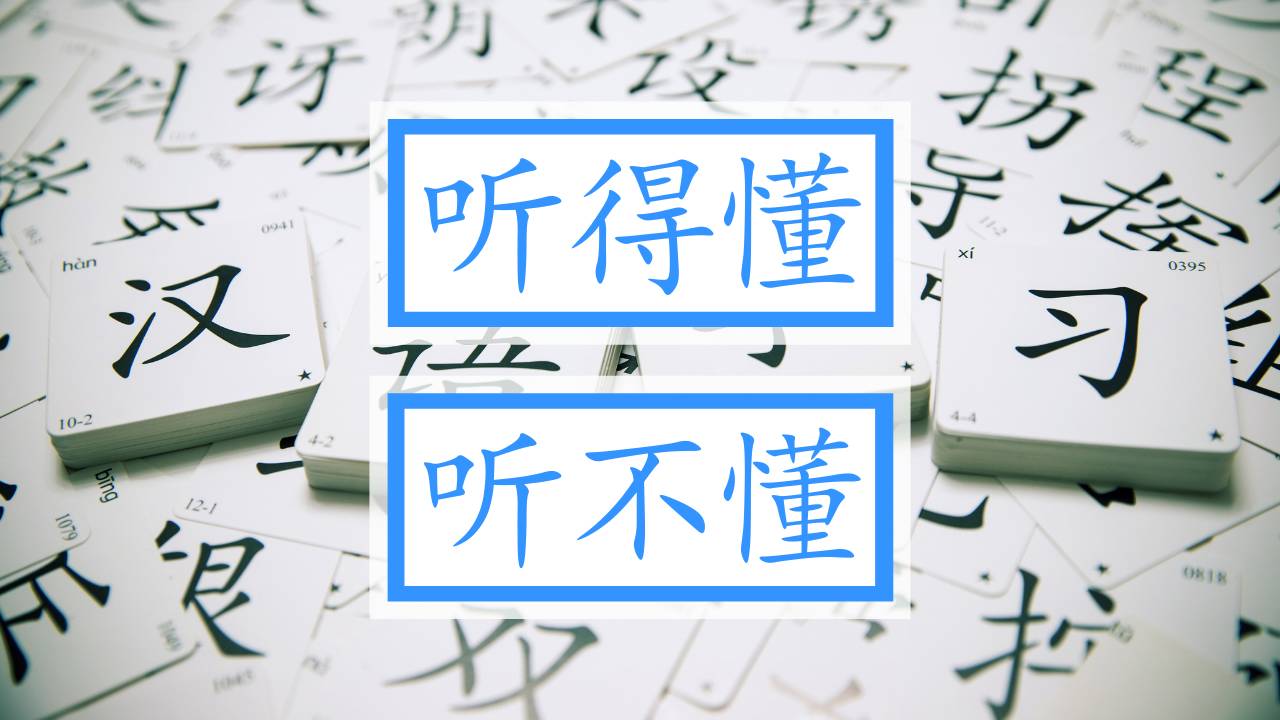
Vocab Unlocked from 懂: 听得懂 - 听不懂
Congratulations!
New Word(s) of Two-Characters or More Unlocked!
The word(s) below have a corresponding flashcard in the Hanzi & Words deck associated with this level. Before you end today's study session, add an image to the card (how to add images to flashcards). After that, unsuspend the card(s).
听得懂
Usage 1 - "be able to understand"
Living Link Suggestion(s):
- Listening can result in understanding.
- Find a video of a western person having a conversation with a Chinese person in Chinese. Clearly, the westerner UNDERSTANDS Chinese.
听不懂
Usage 1 - "to be unable to understand"
Living Link Suggestion(s):
- Listening cannot result in understanding.
- Directly searching 听不懂 comes up with some interesting images.
Have a suggestion? Please share in the comments below!
Comments 2


Click Here to Search Individual Hanzi 汉字
PHASE 1 (Levels 1-6)
- The Basics - Why Does This Method Work?
- How our Pinyin Chart is Different
- What are Chinese Characters?
- Props
- Sets
- Actors
- Scripts
- Inspiration for Scripts
- Special Effects
- Timeboxing
- Why SRS is So Important: Frequency & Memory
- How to Use SRS
- Habit Building Part 1 - Triggers
- Habit Building Part 2 - Routine
- Habit Building Part 3 - Reward
- Habit Building Part 4 - Belief
- Stroke Order Rule #1
- Stroke Order Rule #2
- Stroke Order Rule #3
- Stroke Order Rule #4
- Stroke Order Rule #5
- Stroke Order Rule #6
- Stroke Order Rule #7
- Stroke Order Rule #8
- Stroke Order Rule #9
- Stroke Order Rule #10
- Stroke Order Rule #11
- Stroke Order Rule #12
PHASE 2 (Levels 7-12)
- Understanding Chinese Words - Morphemes
- The Six Steps to Learning Words
- 3 Questions About Words
- Top-Down & Bottom-Up Learning
Living Links Series
Word Structure Series
- Part 1 - What are Chinese Words?
- Part 2 - Verb-What 述宾式
- Part 3 - Verb-How 补充式
- Part 4 - Biased 偏正式
- Part 5 - Parallel 并列式
- Part 6 - Duplicated 重叠式
- Part 7 - Subject-Predicate 主谓式
- Part 8 - Affixed 附加式
PHASE 3 (Levels 13-20)
- The Basic Chinese Sentence
- Helper - Expressing Possession with 的
- Helper - When You Can Omit 的
- Helper - Completed Actions with 了
- Helper - Change of State with 了
- Helper - Present Actions with 着
- Connector - Saying 'But' with 但是 - 可是 - 不过
- Connector - Reasons & Actions with 因为..., 所以...
- Connector - Conditional "If-Then" Statements with 如果..., 就
- Connector - Conditional "If-Then" Statements with 要是...的话
- Connector - "Or" in Questions with 还是
- Connector - “Or" in Statements with 或/或者
- Relator - Using 为 to Express "For"
- Relator - Expressing "From" with 从
- Relator - Expressing Location with 在
- Special - Using 在 as a Verb
- Tone - Softening Tone of Voice with 呢
- “How Does What" - Adverbs of Denial
- “How Does What" - Adverbs of Degree
PHASE 4 (Levels 21-30)
Level 21
- Transferring Money by Smartphone or Bank
- Walk in the Park?! I Have 汉字 to Study!
- Who Determine's a Baby's Looks, Mom or Dad?
Level 22
- How Many Pages of the Book Have You Read?
- Many People Don't Want to Have Babies
- My Girlfriend Can Really Eat!
- What Do You Like to Do?
- What Method Works for Learning Chinese?
Level 23
- Eating Bread
- I Met My Girlfriend in the Park
- Something is Different About My Dog Lately
- The Older Brother is Better Than the Younger Brother
- The Right and Left Side of the Office
- Three Meals a Day
Level 24
- Annoying People
- Breaking Up at the End of the Date
- Going on a Date
- My Two Friends and I
- Overtime at Work
- Red Packets
- Two People in a Relationship
Level 25
- I Want to Find a Boyfriend Too
- My Dad and I
- My Dog Chouchou
- The Big Changes of China
- The Weather is Great, Let's Go to the Park!
- Xiaomei and Her Boyfriend's Day
Level 26
Level 27
- American Journalist Studies Chinese in China
- Can I Still Learn Chinese Anymore?
- Should I Change?
- Children and Their Parents
- Foreigner's Opinion of China
- What Do You Want to Be When You Grow Up?
Level 28
- Daughter & Mother
- Son's Eighth Birthday
- Study, Work & Life
- What's More Important, Looks, or Ability?
Level 29
- Advertisements
- Buying Tickets at Chinese New Year
- Everybody Restaurant
- How Does One Progress
- Son is Out of Control
Level 30
- Cars, Bicycles & Trains
- Potatoes & Beef
- Two Ladies Compare Who's Got it Better
- Young People Raising Cats and Dogs
Phase 4 Grammar Points
Get Involved!
Have any questions about the course? Want to share an interesting "movie scene?" How about an Actor, Set or Prop? Just leave a comment below the lesson in question and we'll talk about it in our weekly podcast!

Keep on learning with us!
We make frequent blog updates that will make you SUPER motivated as you keep climbing the "acquisition mountain." Check it out and subscribe!
Anne Giles 🤝
I hear you and trust that I will learn the difference between words and ideas in English and Chinese when I have more context! Electronic context is useful, but it's a one-way monologue. Social distancing and travel limits still have me hearing nearly zero real-time Mandarin Chinese and having nearly zero opportunities to interact and test my hypotheses about what word goes where when people are truly trying to understand each other.
So, I did go on a search to find the difference between 懂 dǒng and 明白 míngbái.
Here's an excerpt from an essay I found by Chia-Chia Lin in The Paris Review:
In Mandarin Chinese, the commonly used terms dong (懂), mingbai (明白), liaojie (了解), and lijie (理解) can all be translated to the English “understand,” though which term you use is related to tone, context, familiarity, and abstractness. The breakdown of the terms can be illuminating. For example, mingbai is composed of the words ming, “bright” or “clear,” and bai, “white,” and conjures a sense of clarity. The written character for dong contains the radical, or written component, that means “heart”—often found in words that deal with feelings and thoughts. Lijie and liaojie both contain the word jie, “untie.” And the written character for jie (解) unfolds further. If you start at the upper right and work clockwise, you can identify the pictographs 刀 (knife), 牛 (ox), and 角 (horn); the word is said to have originated from “cut off the ox’s horn”—to dissect or open up.
https://www.theparisreview.org/blog/2019/05/07/one-word-understand/
Thanks to MB members, I used this link:
https://hanzisearch.netlify.app/
to find that 解 jiě is covered in Level 29. I looked ahead and see 了解 liǎojiě is mentioned here:
D:\Courses\Mandarin Blueprint\Course/phase-4-graded-reading-levels-21-30/categories/3636031/posts/12972073.html
Online, I found lots of other efforts to explain the differences, none very clear 明 or helpful.
懂
明白
了解
理解
Care to explain the difference? Or does knowing the difference between them matter much?
Thanks for considering!
MB Team
This is where Luke and Phil talked about your question in the Mandarin Blueprint Podcast:https://www.youtube.com/watch?v=7snaR-D-7R0&t=1536s