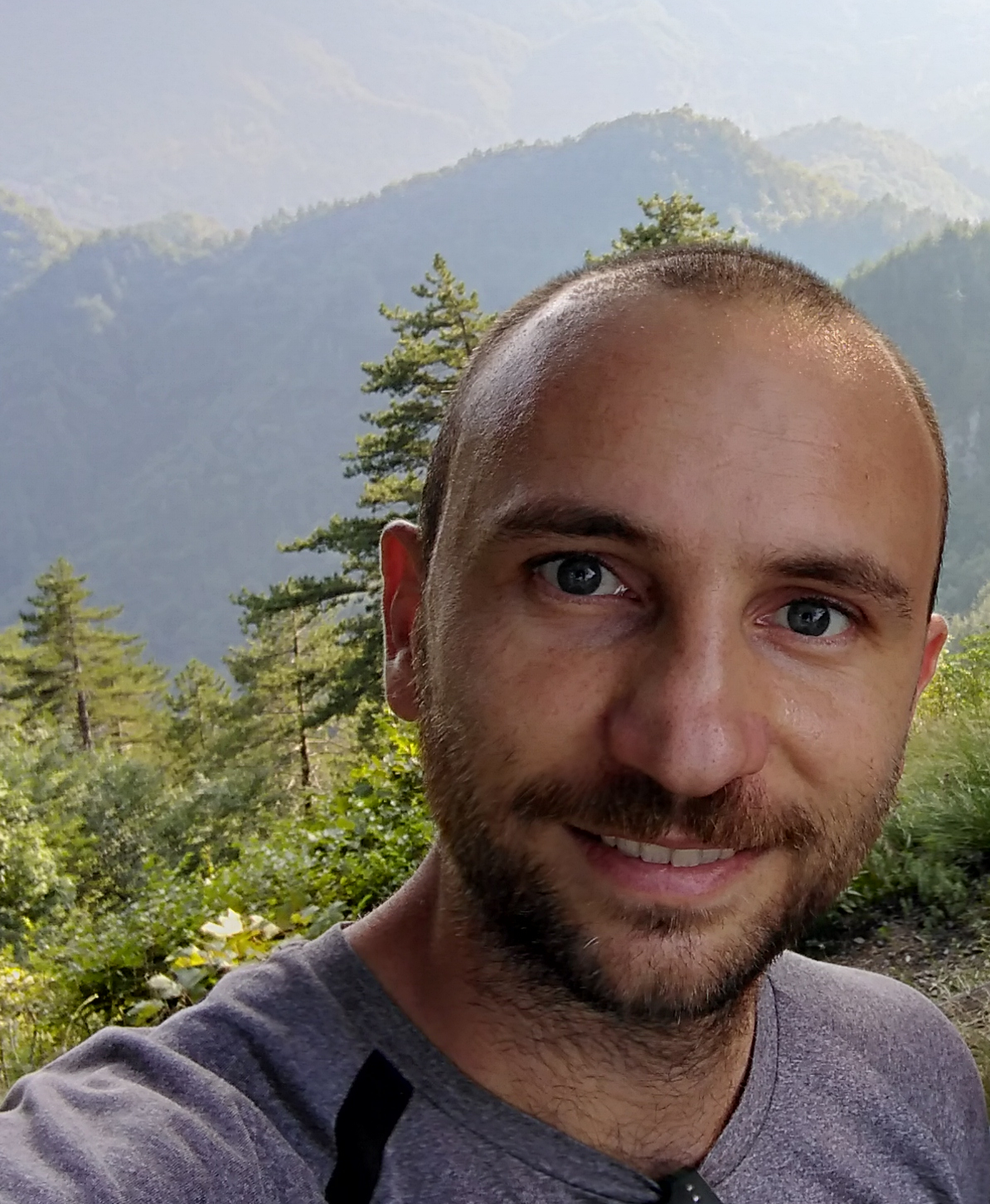
My research confronts statistical models and machine learning methods with massive heterogeneous biodiversity data to answer macro and community ecology questions. I am interested in measuring and anticipating the effects of human pressure on ecosystems, in particular plant invasions, to inform conservation planning. My interest for citizen sciences data pushes me to ask new questions that this type of data may specifically contribute to answer. Therefore, I develop methods to exploit the rich information hidden in massive crowdsourcing datasets.
I'm a permanent research scientist (Chargé de recherche) at the Inria branch at the University of Montpellier, with the ambition to developp robust methods for spatio-temporal Species Distribution Models from heterogeneous biodiversity data. That is, I work on SDM methods to account for the peculiarities of species observation types (e.g. presence-only records, presence-absence vegetation plots...) while correcting for sampling biases in space, time, across species and observers. Through deep learning based SDMs (deepSDMs), I try to make SDMs able to deal with heterogeneous input variables, such as satellite images, satellite time series or environmental rasters, which can enable to capture biodiversity patterns at a high resolution. I also use and adapt deep learning losses and algorithms to scale deepSDMs to large spatio-temporal coverages (Europe), many species (e.g. thousands) and a high spatial resolution (e.g. 50 meters) while the computational burden and carbon footprint low. With the Pl@ntNet team and in the horizon Europe projects MAMBO, GUARDEN, B3 and now BEAGLE, we turn these methodological advances into useful operational tools for biodiversity conservation in Europe, by delivering high resolution maps of habitats and plant species distribution at European scale (see GeoPl@ntNet). Current challenges are to downscale temporal trends of species occupancy and Essential Biodiversity Variables, notably thanks to citizen science presence-only records, in order to map biodiversity changes, and in particular species invasions, growth or declines in space, and further connect them to local drivers (climate change, agriculture, urbanisation). To further unveil ecological processes underlying species distribution changes, focusing on biological invasions, I try to delimit the estimability of invasion dynamic SDMs from heterogeneous data and to deliver a robust estimation routines for this class of model in the form of an R package.
Regarding my early trajectory, I did my PhD INRAE at the UMR AMAP, Montpellier, France, where I studied statistical methods for species distribution models (SDM) based on large presence-only datasets coming from citizen sciences programs. The exploitation of data from the project Pl@ntNet was a major motivation for my thesis, and I collaborated closely with this project. My work included to (i) evaluate the benefits of deep learning and convolutional neural networks approaches for presence-only SDM, leading to pioneer deep learning approach to SDMs (deepSDMs), (ii) caracterize biases arising due to the distribution sampling effort, species niches and background points in presence only SDM based on Poisson point processes (iii) develop an new unbiased approach based on a joint model of sampling effort and species distributions, and (iv) measure the sampling and taxonomic coverage of Pl@ntNet contributions, in order to compare it with national botanical conservatories. This PhD was founded by a the national INRA-INRIA scholarship of 2016.
I did a first 17 months CNRS PostDoc in the Laboratoire d'Ecologie Alpine, Grenoble, working for the project EcoNet. We explored the use of graph embedding methods to compare ecological interactions network architectures across space, environment or time. I especially leveraged the knowledge of trophic interaction between European terrestrial vertebrates and broad scale crowdsourcing data (GBIF) to study the changes of trophic network architectures related to higher land use intensity.
I worked with David Richardson and Cang Hui for 18 months at the Center for Invasion Biology and Biomath Hub of Stellenbosch University, South Africa, where we explored how iNaturalist and other crowdsourcing data could complete more standardized data for studying plant invasions. The use cases spanned various scales, from the early detection of the naturalisation of cultivated species around South African urban areas to the global monitoring of introductions. I also started developping a Dynamic Species Distribution Modeling (DSDM) approach combining past datasets (e.g. Southern African Plant Invaders Atlas) with recent crowdsourcing records (e.g. iNaturalist) to reconstruct plant invasion spatial dynamics over decades and better understand their drivers.